A functional, working prototype that walks families through sensitive processes. The data model and the access design were the hard problem, and they were settled before the first screen.
Vimenti runs the first integrated family services center in Puerto Rico, a two generation model where education, health and economic mobility sit under one roof. A family's path crosses all three. For years that path lived in individual navigators' heads, in spreadsheets and in stacks of paper, and five years of assessments held real signal about what families needed that nobody could read across. The facts a household hands over in an intake interview are income, housing, health and family circumstance, and every copy carried them further from anyone's control.
Intake happens in community settings on unreliable connectivity, families come back months later expecting continuity, and the level a family is assigned moves real resources, so it cannot be a black box. That set the terms before any interface existed: sensitive answers captured away from the office, a score a supervisor can audit line by line, a worker who sees the families they carry and nothing else, and a way to learn from years of intake without reading anyone's file.
We designed with the navigators rather than only for them, and we settled the data model and the access rules before drawing the screens. Caseloads are private and enforced on the server, not hidden in the interface. The instrument splits in two, so a family answers the ordinary questions on its own phone through a single-use link while the delicate ones stay inside the in-person conversation. Scoring is deterministic and explained value by value. Generative AI drafts narrative over tokenized placeholders, so personal data never reaches the model. Reporting is aggregate by construction. What is left is a small number of doors, all of them logged, on a deployment we watch.
A social worker sees only the families they carry. Managers and administrators see the program. The restriction lives in the server, so the screen is not the thing holding it shut.
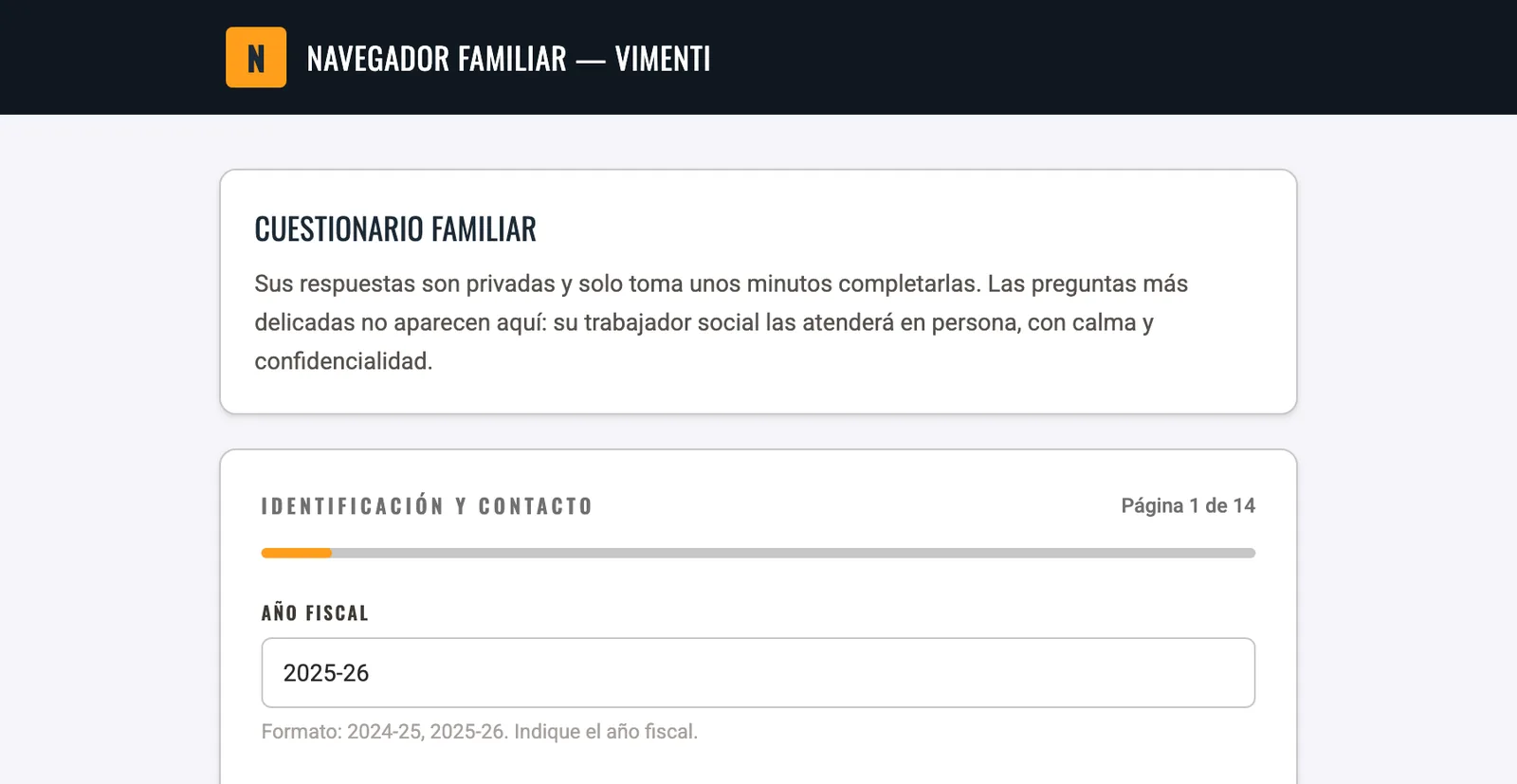
Families answer the non-confidential questions on their own phone through a single-use prefilled link. The delicate questions never leave the navigator's in-person conversation.
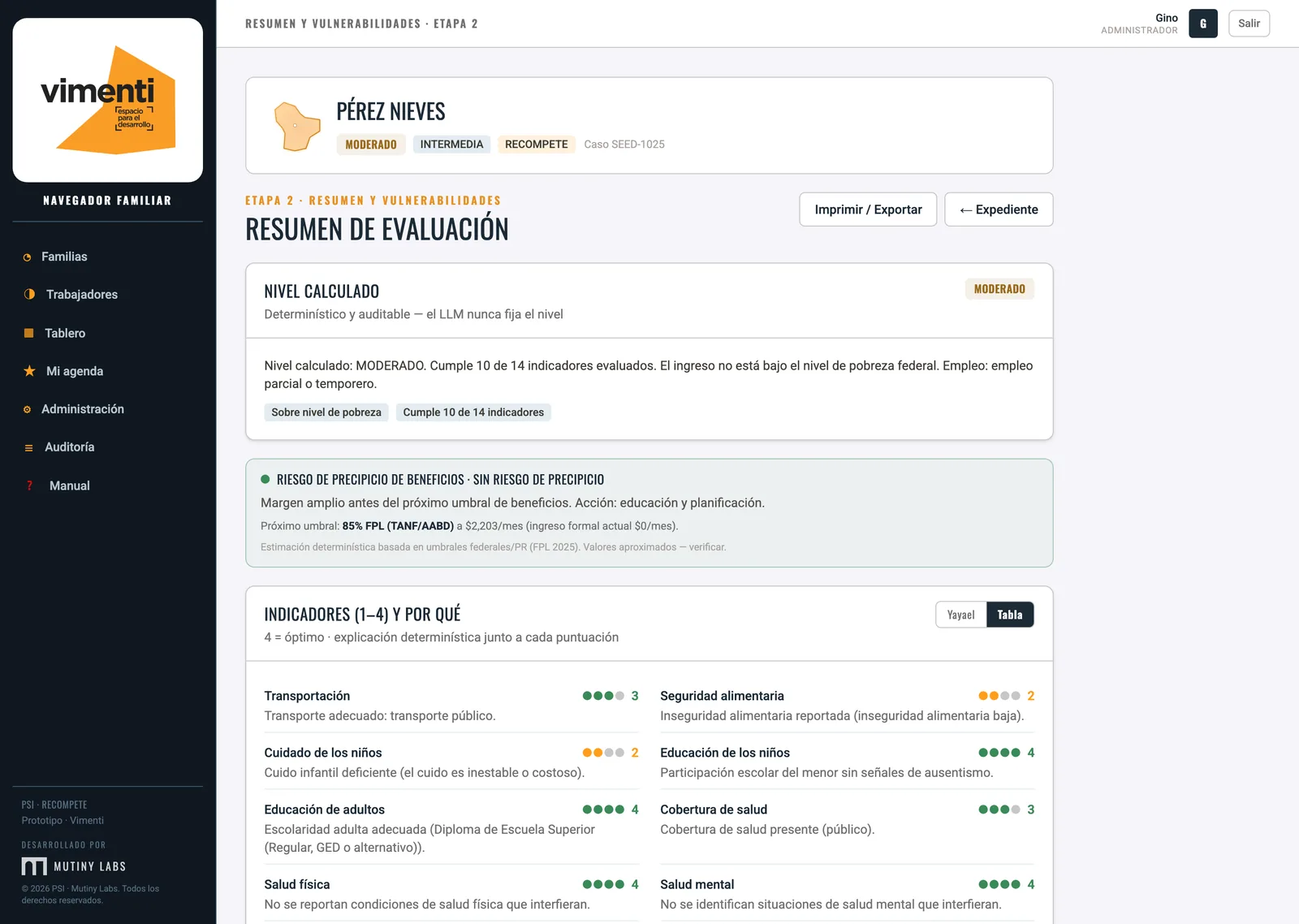
Sixteen indicators scored one to four on a fixed rubric, with the level computed as answers arrive and every value explained beside it. The assistant drafts language; it never sets the level.
The same deterministic read that sets the level identifies each family's gaps and needs, and suggests goals from the catalog that answer them. The navigator assigns, adapts or declines each one case by case; the suggestions stay updatable, never automatic.
The summary estimates what each participant should be receiving and flags how close the household sits to its next benefit threshold, using the same verified rules engine behind the public Calculadora de Beneficios.
Every piece of personal data becomes a placeholder before a summary is drafted. Generative AI writes over the placeholders. What it does not write stays deterministic.
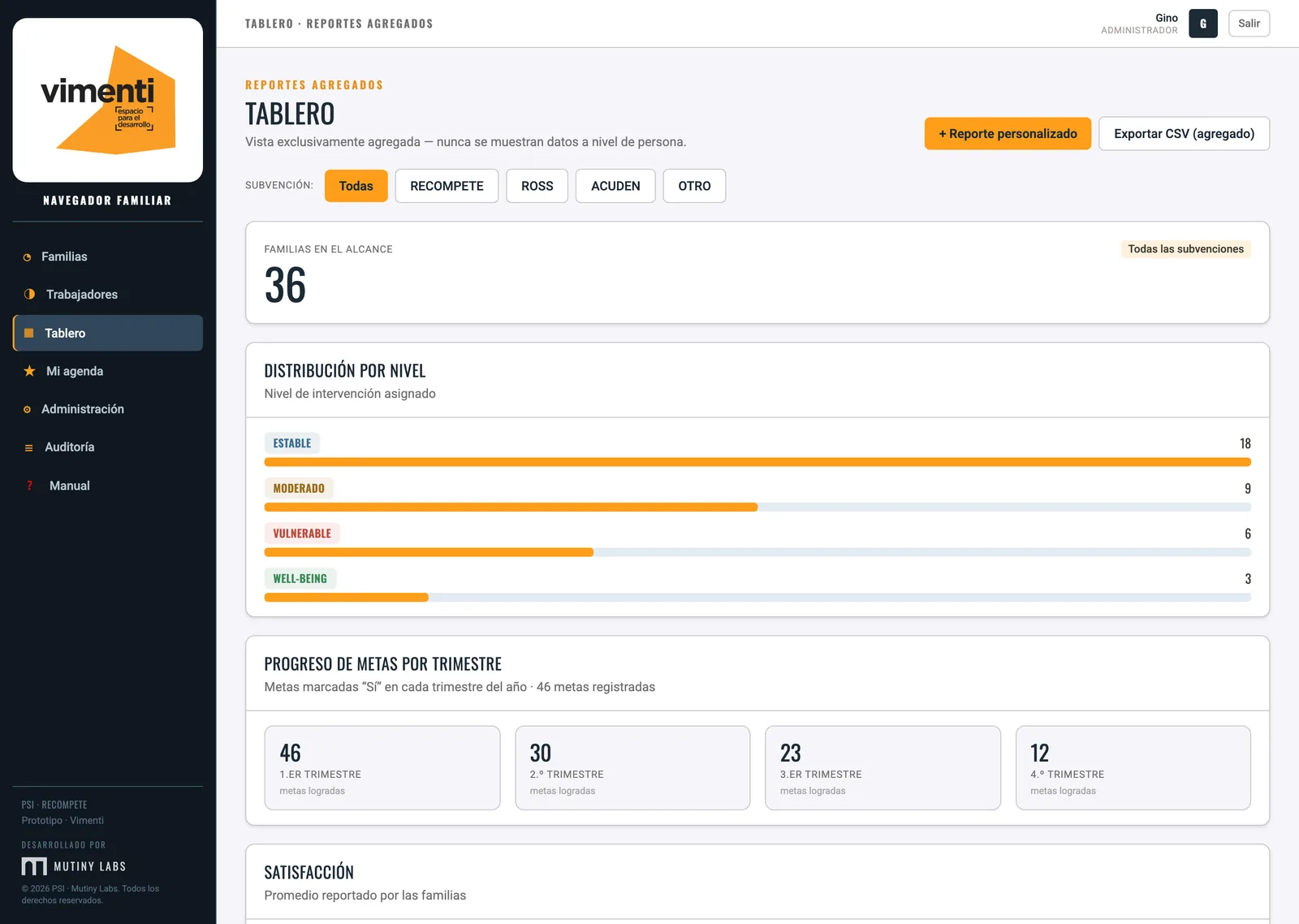
The board shows counts and percentages, filterable by grant. It holds no view of a single household, so there is no record in it to open.
A separate installable app fills evaluations and logs contacts with no signal, encrypted at rest behind a field PIN, syncing without duplicates and wipeable remotely.
Every access and every change is written to the log, failed sign-ins included, so the question of who read what has an answer.
A caseworker sends a QR code or an email so the family answers the questions only it can answer. The navigator completes the rest in the field, offline if needed, resuming wherever anyone left off.
Sixteen indicators, one to four each, computed live and shown value by value, so a supervisor can audit exactly why a family landed where it did.
Personal data is tokenized before any summary is requested. The model writes narrative over the placeholders and never sees the household behind them.
The assessment becomes a family roadmap and a referral pathway drawn from the goal catalog, with a follow-up cadence set by the level and adjustable without losing history.
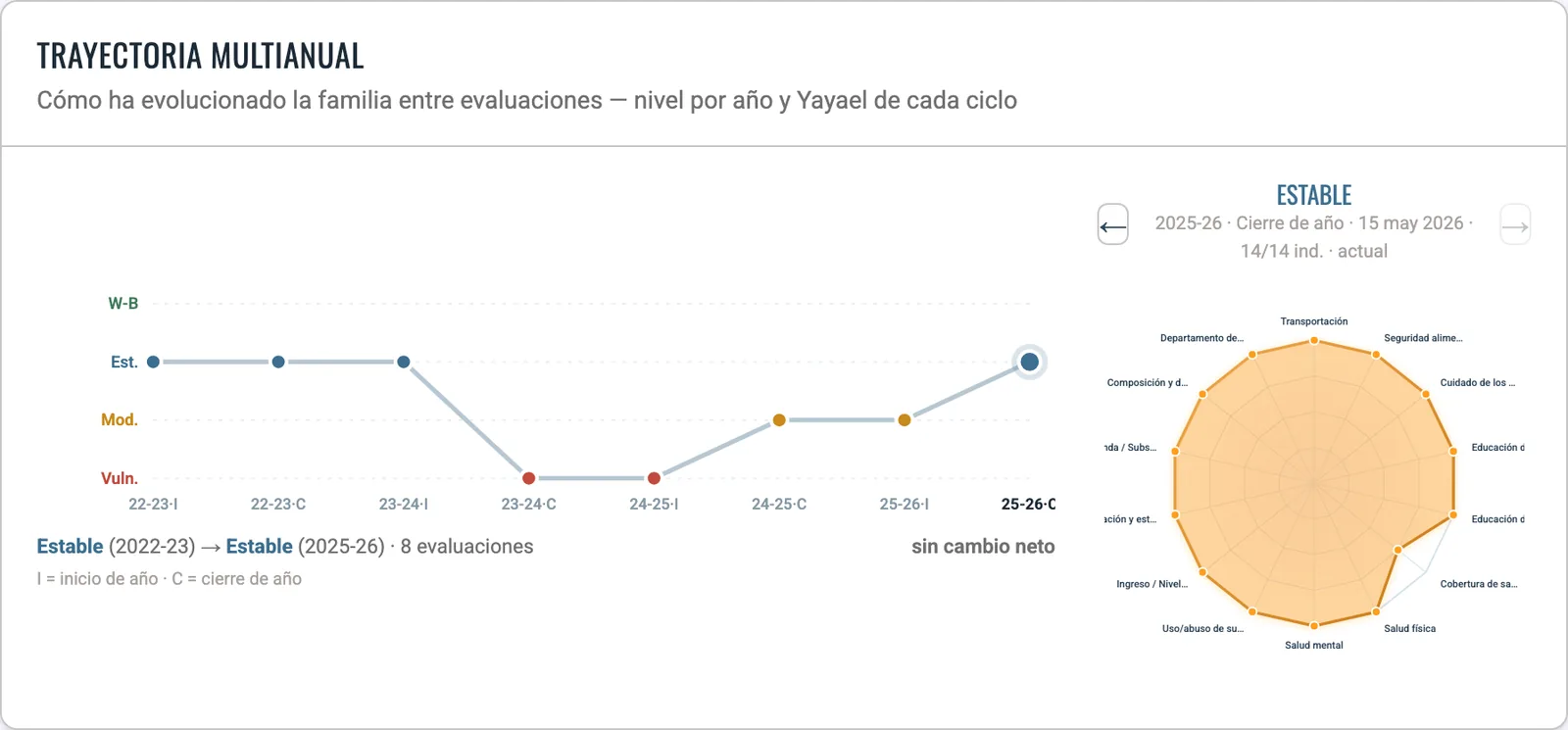
Follow-up interventions and touchpoints are part of every plan, and any change in the family's conditions is registered there and rescored on the spot: a new job, or the loss of one. The level tracks the household as it lives, not as it last interviewed.
Because every family answers the same instrument, an analysis layer reads across years of intake in aggregate, showing where need concentrates and where the catalog falls short. Years of back assessments were read exactly this way, and the goals that analysis surfaced were added to the catalog, so plans can cover the vulnerabilities intake actually reveals.
By request of the program: Family Navigator is a functional, working prototype, a proposal for how this intake-to-follow-up process can be solved and automated, built for Vimenti to validate. It is not an approved platform in production use.
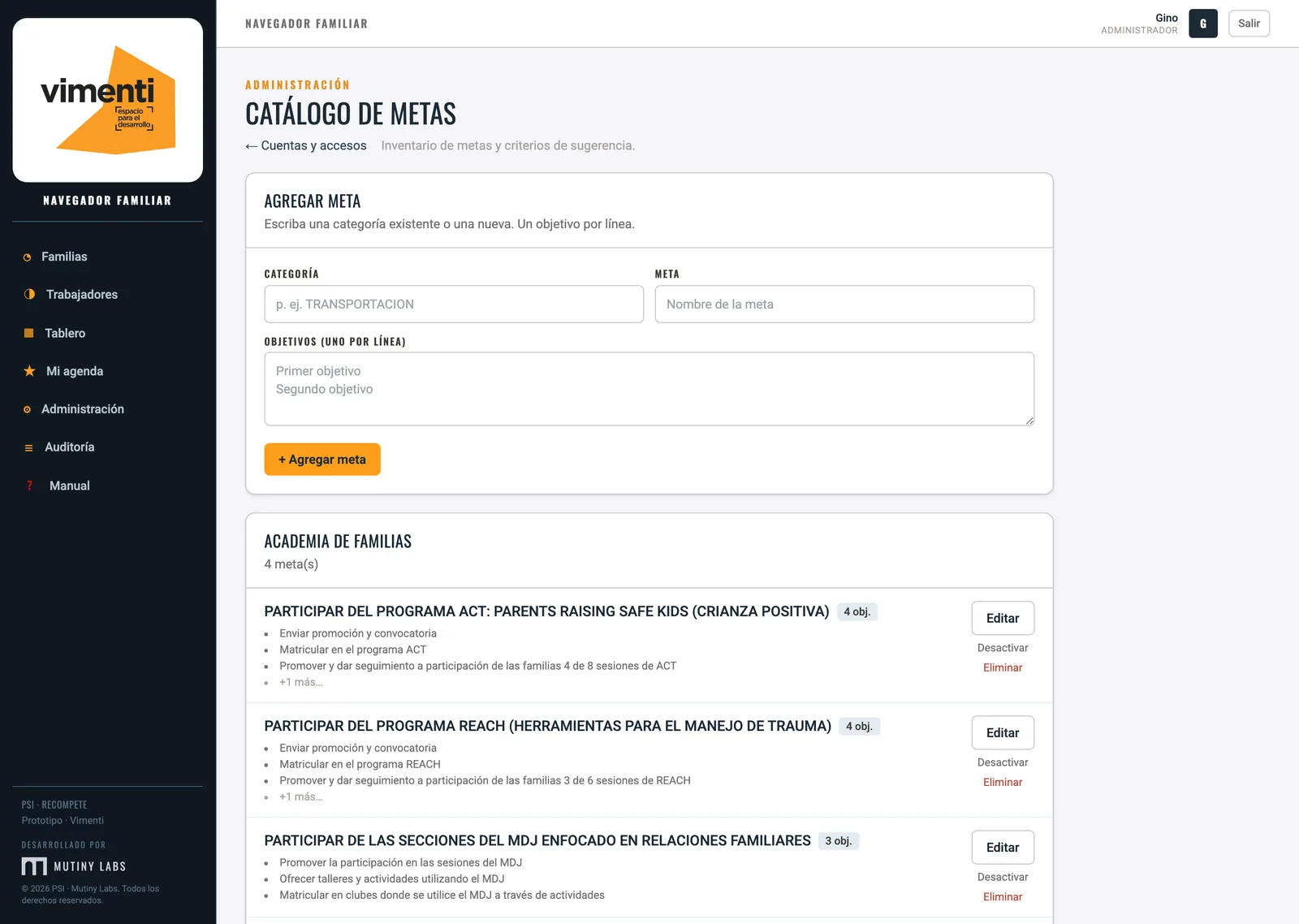
under the hood: React and TypeScript, serverless API layer, managed Postgres with versioned migrations, role-scoped private caseloads, granular audit logging, deterministic scoring, verified benefits rules engine, PII tokenization ahead of generative-AI summaries, encrypted offline field capture with background sync, aggregate-only reporting
We reply personally. A senior partner, not a sales pod. We'll tell you straight whether we can help.