Trade scrolling for strolling. The agency website rebuilt as a small island you can walk: the studio is a house, client work is a neighborhood, the library is a garden, and the process is a workbench where visitors make the decisions themselves.
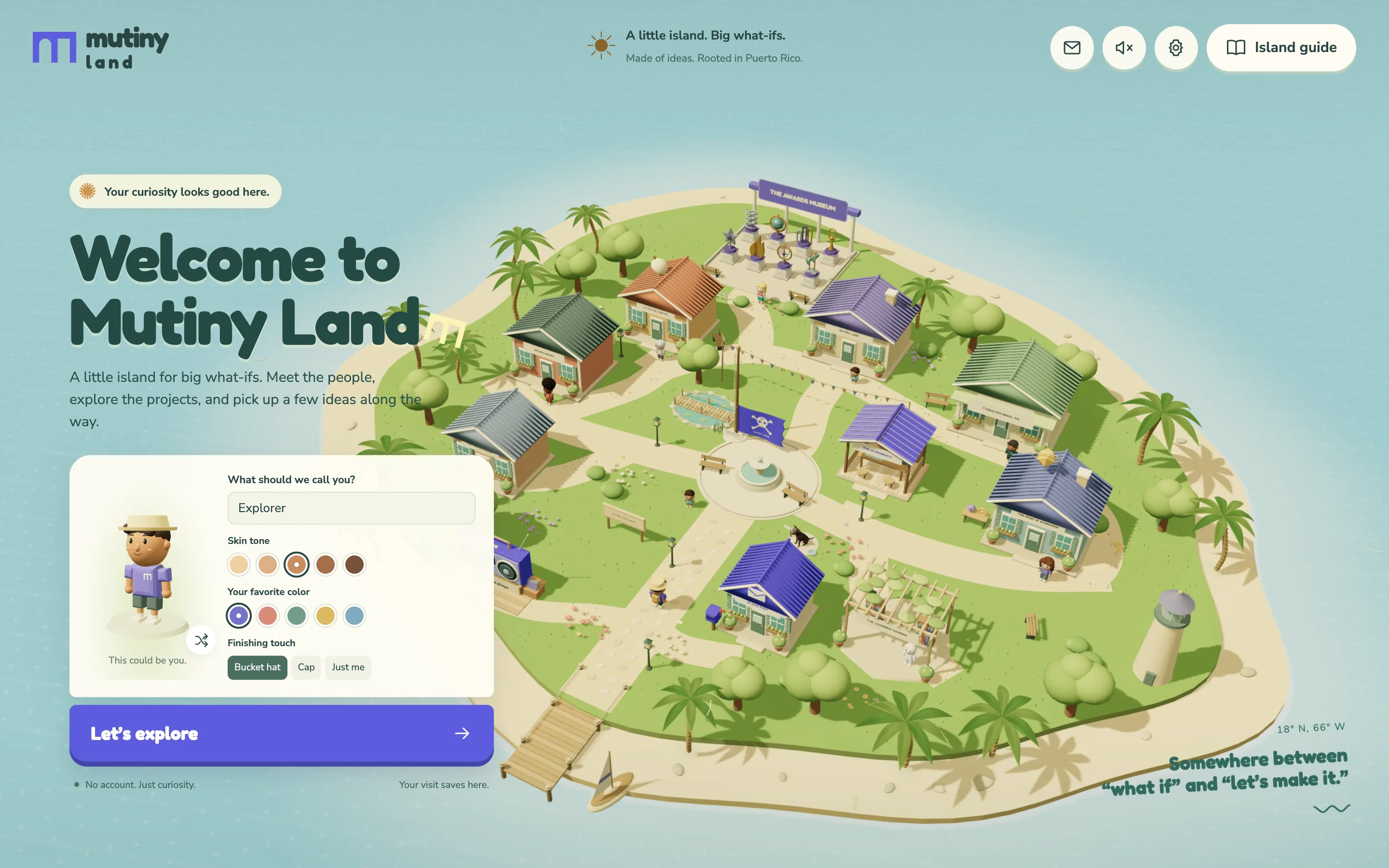
The Mutiny Labs site holds cultural archives, social-impact platforms, creative institutions, research experiments, a public learning library and the founder's own story. It does what agency sites do: it gets read and it gets left, and the connections between the work stay invisible. We had tried play once before, with the SHIP IT! trilogy in June 2026, three small games in which real clients arrived as tickets. They were fun and they never touched the site. Mutiny Land started from the opposite premise: the world would be the interface, and the site's own content would furnish it.
The brief was an immersive alternative that gets visitors to experience the breadth of the work, not a 3D backdrop. Every destination needed a reason to exist and every interaction had to connect to something useful. Five questions shaped it: how a large portfolio becomes inviting at a visitor's own pace; how the studio's process becomes understandable through participation; how characters add personality without crowding the content; how progress and rewards widen discovery without gating information; and how it all stays usable with an ordinary keyboard, pointer and thumb.
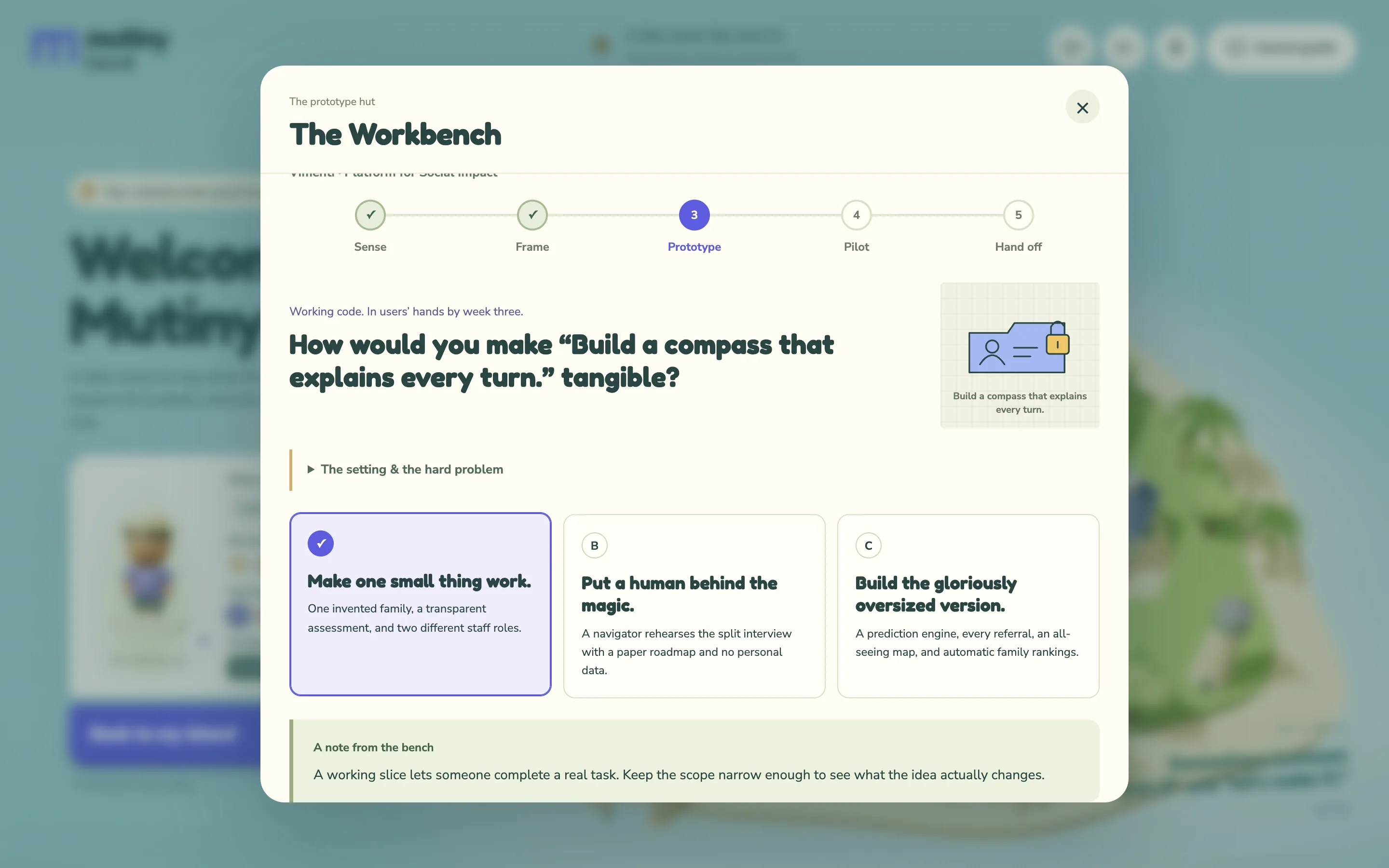
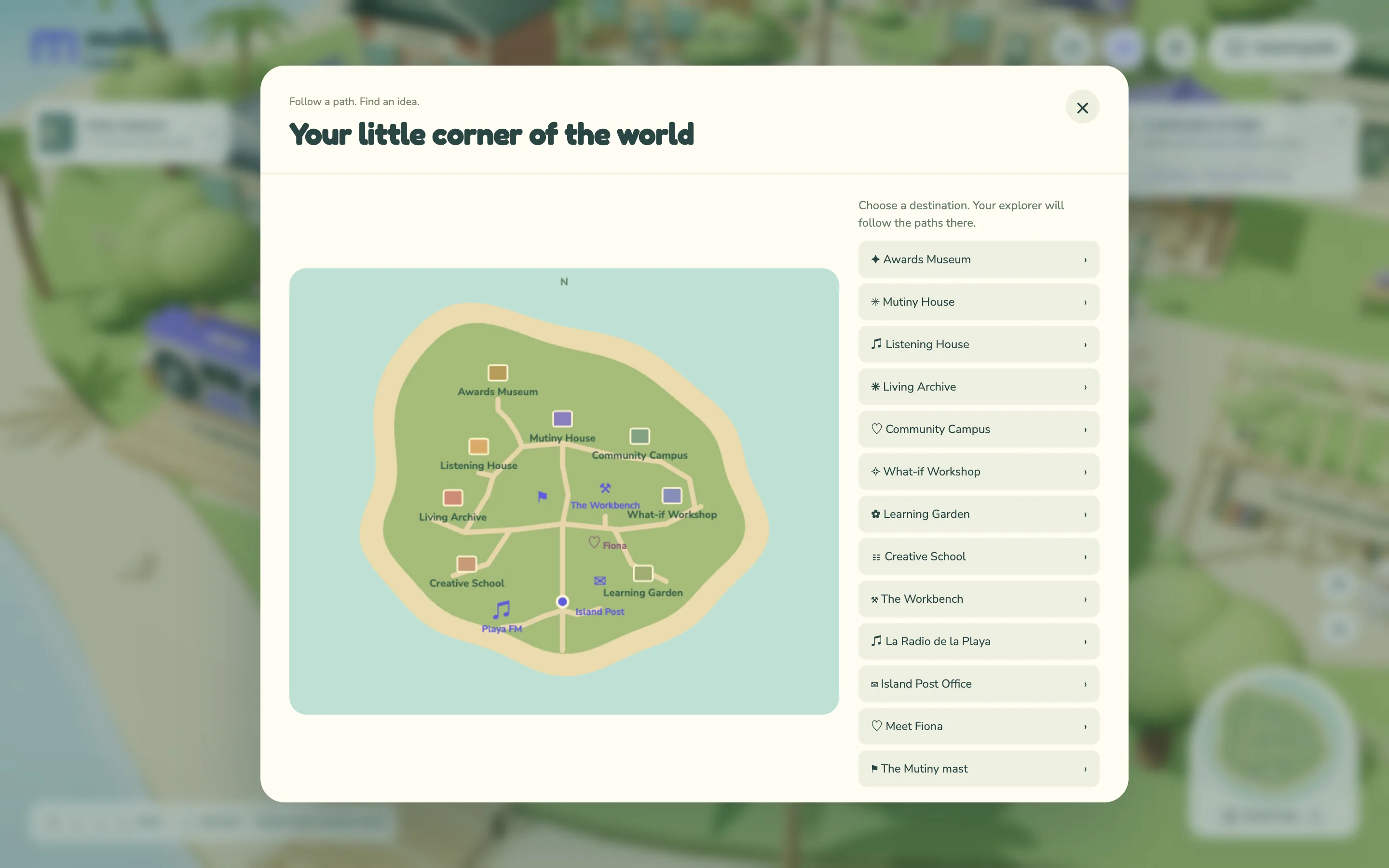
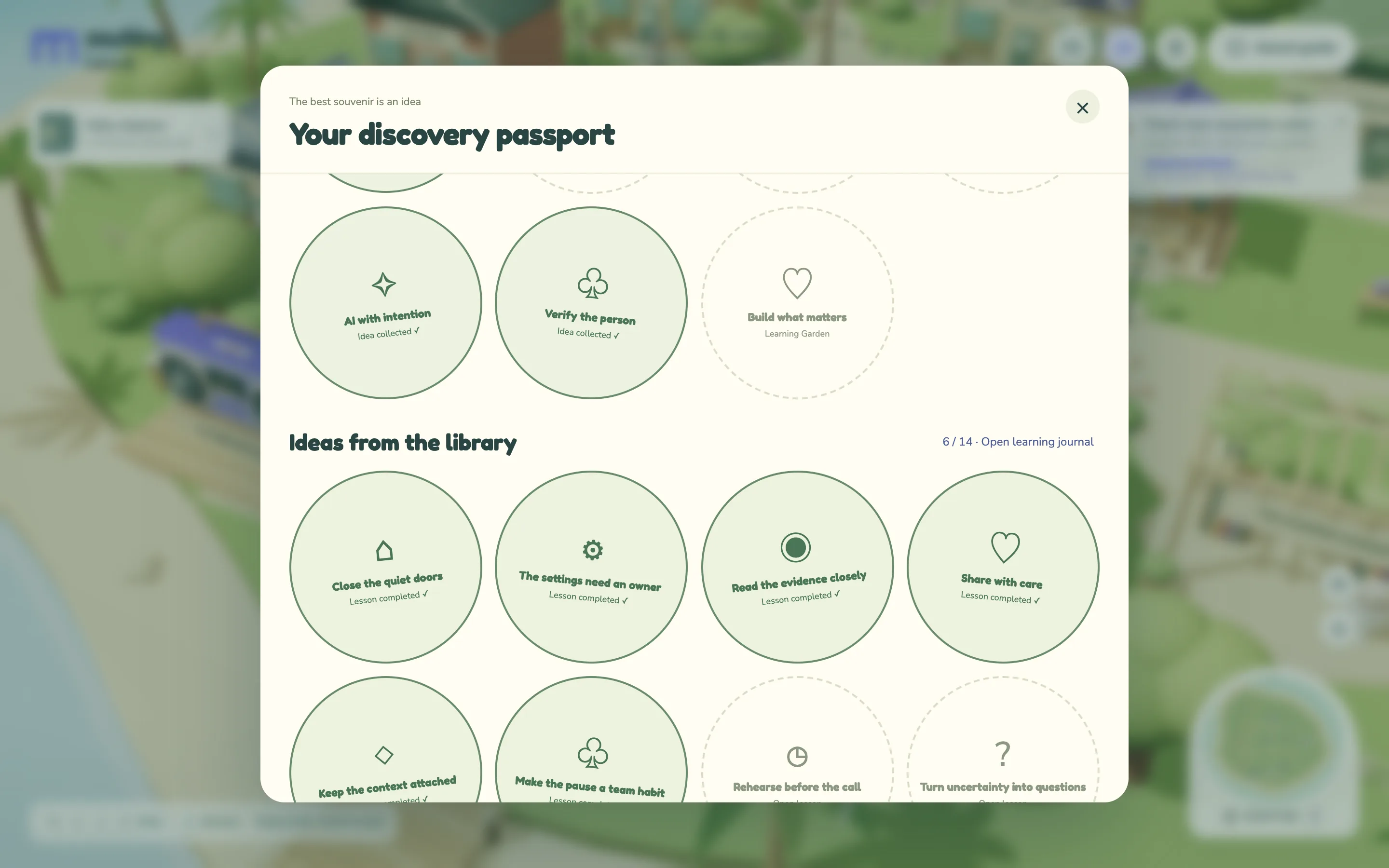
We translated the site's information architecture into a village. Places organize the content, residents introduce its themes, and activities give visitors a reason to stay with an idea. The studio's process language, Sense, Frame, Prototype, Pilot and Hand off, is explained in Mutiny House and practiced at the Workbench. The island itself is procedural geometry in WebGL, with pathfinding for click-to-walk and quality that steps down on slow machines, and it reads the same case-study data as the work pages at runtime, so nothing can drift. A passport of 25 stamps gives the wander a shape and ends with a flag ceremony.
The first screen is a live 3D explorer: a name, five skin tones, five outfit colors, a bucket hat or a cap. No account. The coastline, plaza, pier, lighthouse and museum headland are generated in code, with 950 instanced grass tufts and a switch between daytime and sunset. Walk with keys, click the ground and the character finds the route, or use the joystick on a phone. The whole island weighs 7.2 megabytes.
Mutiny House explains the practice, the founder and the three ways to work together: Decide it, Build it, Keep it working. Seven more houses hold the work: La Voz del Centro, Archivo Negro, PSI and RIMAS, the lab experiments, Cambio en Clave and La Escuela Libre, the library, and eight pieces of recognition turned into sculptures. Cards, metrics and screenshots are fetched from the site's own case-study data, so the island can never say something the site does not.
Nine human residents and Fiona, the studio dog, with 373 authored passages and 27 topics, each with two paths and a deeper follow-up. The system remembers what you have heard and prefers new lines. Talking to a host opens a panel with a large, reactive 3D portrait layered over the house, so your page and scroll position are kept. Authored text and choices, not a chatbot, and talking earns no stamps.
Six real client challenges, five decisions each: whose experience to investigate, which bet to make, how small the prototype should be, which pilot tests the main risk, and who owns it after. Feedback follows your route: a prototype too large to learn from, a rehearsal that never tested working software, a pilot that dodged the risk your bet named. Then See how Mutiny actually built it reveals the published case beside your run. No leaderboard, no single score.
Twenty-five stamps: eight places, three garden warm-ups and fourteen library lessons adapted from the public guides. At 25 the pirate flag hoists over the plaza with confetti and a fanfare and unlocks the fifth postcard. The beach boombox plays twelve original tracks synthesized in the browser; the post office sends postcards as ecards or links. Progress lives in the browser, names and notes stay out of analytics, and Calm motion and Quiet walk keep it usable.
The island fetches the site's case-study JSON when it loads. Titles, metrics, captions and screenshots are the work pages' own; nothing is copied, so nothing goes stale.
Coastline, plaza, pier, lighthouse and the museum headland come out of code, not a modelling package. The whole world, engine included, is 127 files and 7.2 megabytes.
Eight destinations, each with a resident at the door rendered from their own 3D model, a portrait, and a voice written for the work inside. The doorway opens the content; the host opens a conversation.
Keys, click-to-walk with pathfinding, or a joystick. M opens the map, P the passport, B the radio. Anyone in a hurry opens a house, the radio or a Workbench challenge from a link.
Talk is a panel over the house, so the page, the scroll position and the current activity stay where they were. The system prefers lines you have not heard.
Five moves on a real project. The readout judges the logic of the run, not a score, then shows the real build next to yours.
Twenty-five stamps, a flag ceremony, five postcards to send. No account was created, and no name or note ever reaches the analytics.
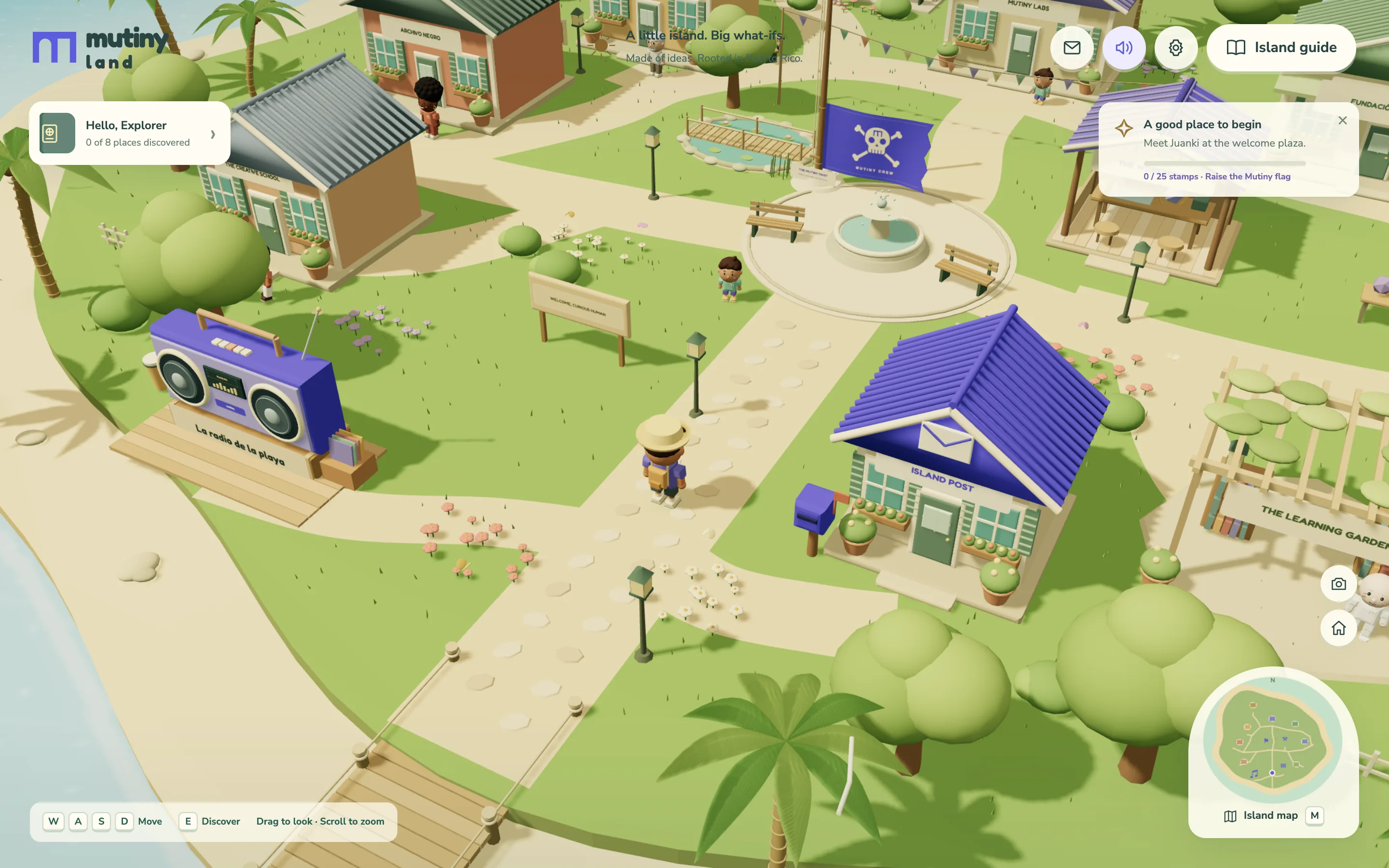
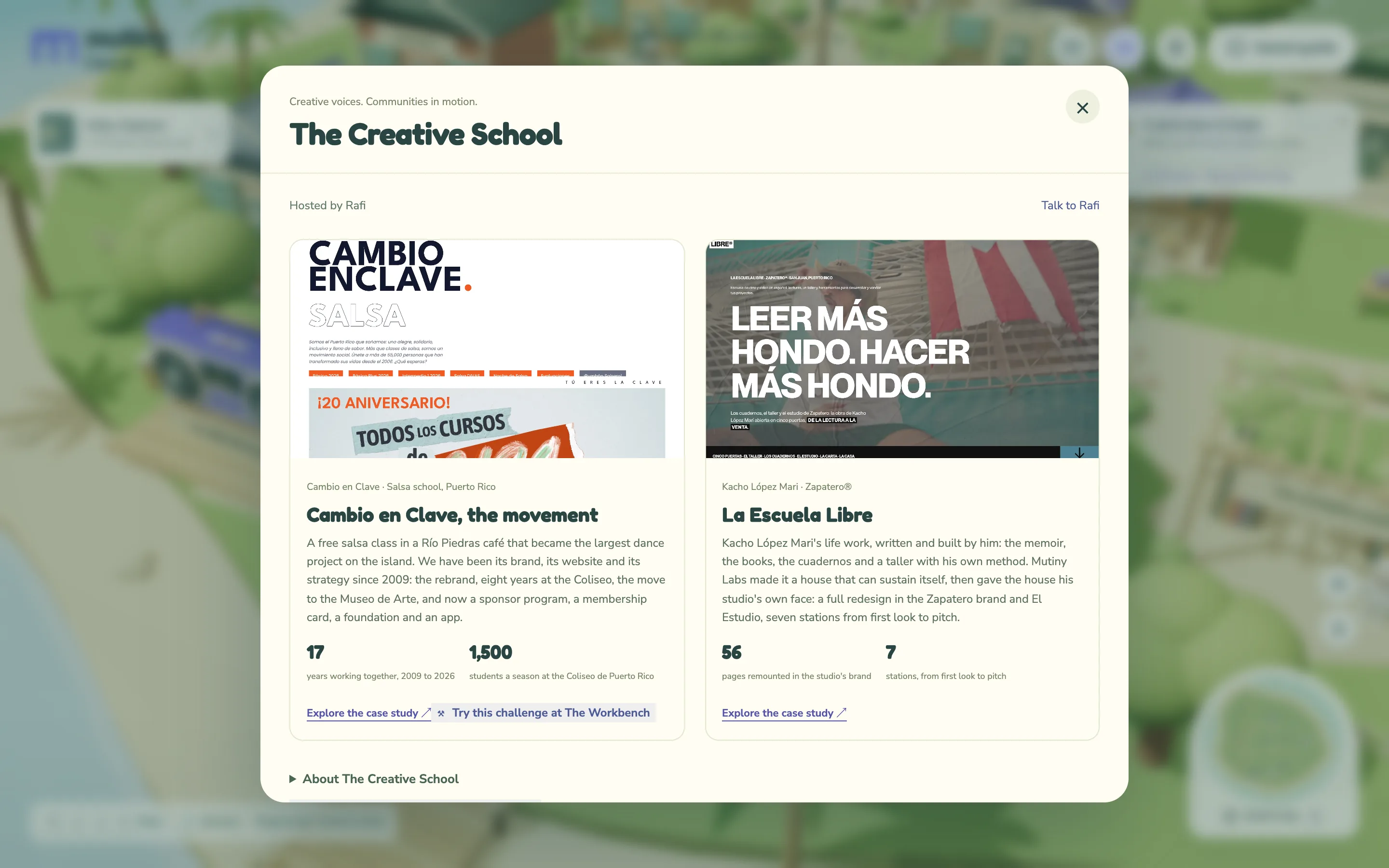
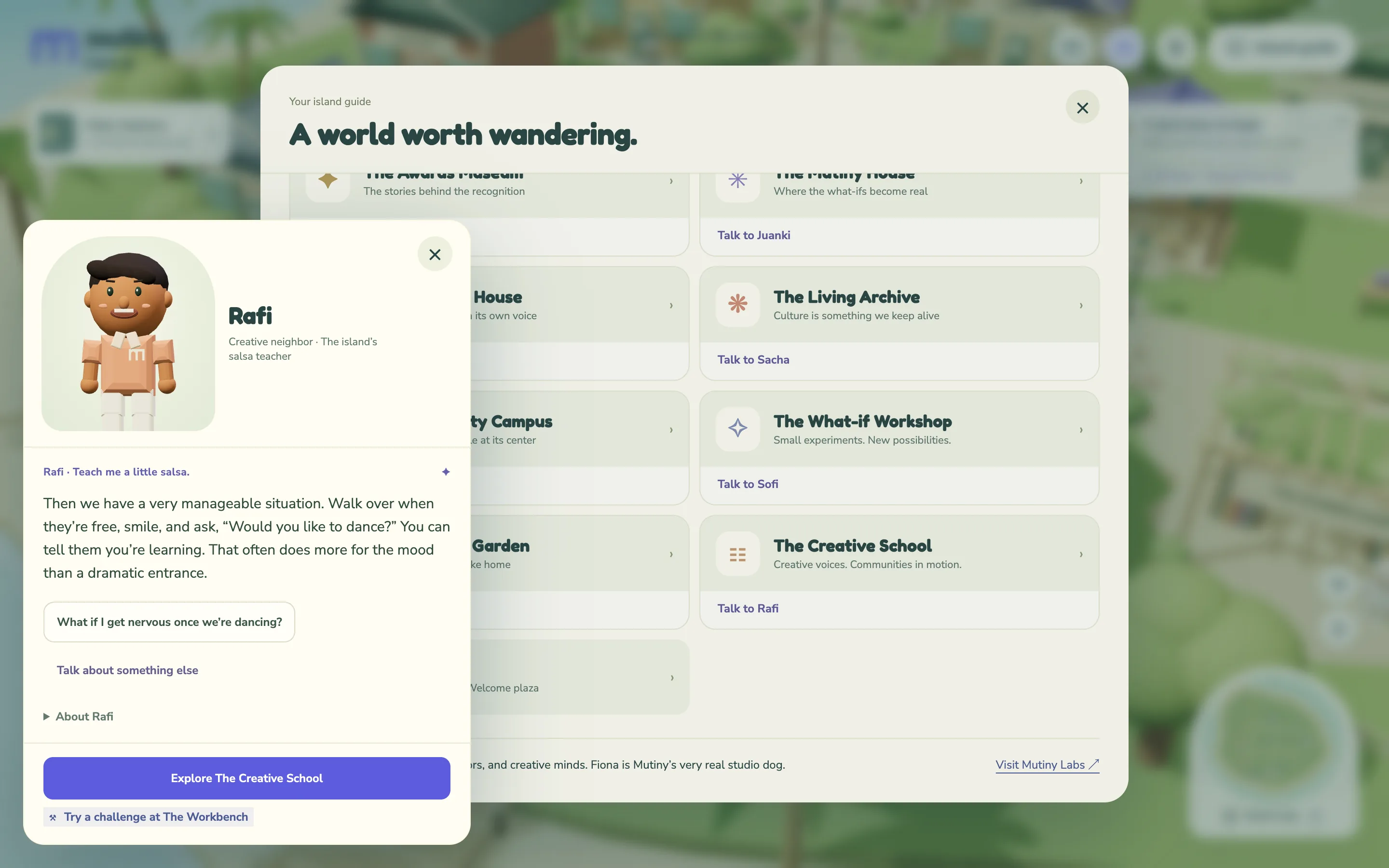
under the hood: Static HTML, CSS and JavaScript with a locally bundled Three.js renderer on WebGL2, procedural world and avatar generation, A* navigation, instanced rendering with adaptive detail, Web Audio music synthesis from original scores, runtime binding to the site's case-study JSON, authored dialogue system with local memory, one serverless function for postcard delivery through a transactional email service, allowlisted analytics with 37 custom event types, browser checks for the full island journey
We reply personally. A senior partner, not a sales pod. We'll tell you straight whether we can help.